
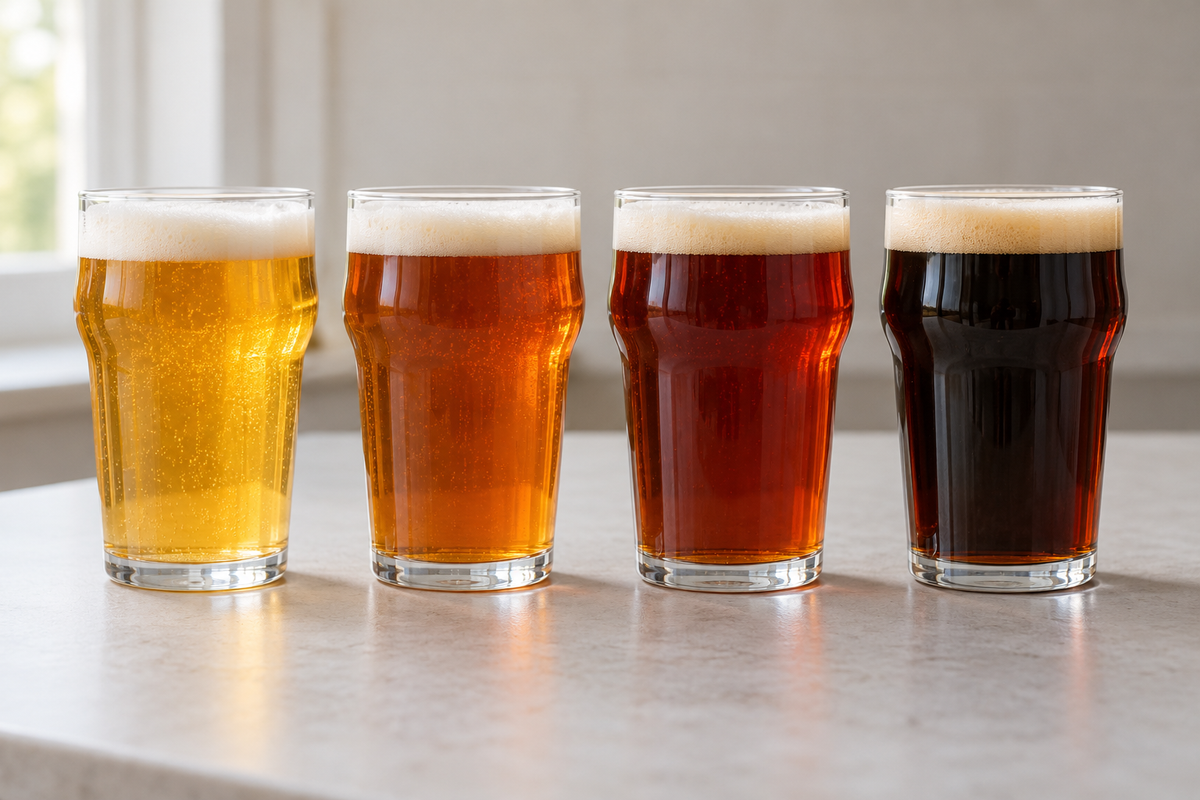
A home brew ale kit is easiest to choose when you know three things: the sort of pint you enjoy, the ingredients you need to add, and whether you already have the equipment. Golden, amber, red and brown ales can all be made from kits, but the recipes, strength and hop character vary.
This guide helps you compare the options before buying. Browse our home brew ale kits alongside it, then use the individual product instructions for the actual brew.
Pick a flavour you enjoy. Check the batch size, extra fermentables, yeast temperature range and packaging needs before deciding which kit is right for you.
What Does a Home Brew Ale Kit Include?
Most malt-extract ale kits contain hopped malt extract and a yeast sachet. Some also include separate hops, priming sugar or other recipe ingredients. These are usually ingredient kits: a fermenter, hydrometer, cleaner and bottles or a barrel are separate unless the listing specifically includes them.
The malt extract supplies the base for the beer; the hops and yeast help shape its bitterness, aroma and fermentation character. Some kits need extra brewing sugar, beer enhancer or malt extract to reach the intended strength and volume. Others already supply enough fermentable ingredients for the main fermentation.
If you own no brewing equipment, compare our beer starter kits first. Read their contents carefully too: some combine equipment and ingredients, while equipment-only packages let you choose the ale kit separately.

Choose the Ale Style You Enjoy Drinking
Think about the beers you order in a pub or buy in bottles. Do you prefer a lighter, refreshing pint, a balance of malt and bitterness, or a darker beer with more toasted malt character? Colour helps narrow the choice, but it does not tell you how sweet, strong or bitter a beer will be.
| Style | A useful starting point | Check the recipe for |
|---|---|---|
| Golden ale | A lighter-coloured ale, often with a refreshing finish | Hop character and bitterness: golden does not always mean mild |
| Amber or traditional ale | Malt flavour balanced with hop bitterness | Whether the recipe leans towards a drier finish or richer malt |
| Red ale | Copper-to-ruby colour with recipe-dependent malt and hop character | Caramel, rye, fruit or hop notes in the tasting description |
| Brown ale | Darker malt flavours that can include toast, nuts or caramel | Strength and bitterness rather than assuming every brown ale is sweet |
| Pale ale or IPA | A good place to compare more hop-led recipes | The balance of aroma, bitterness and malt; these vary widely |
For a narrower choice, explore our bitter kits, pale ale kits or IPA kits. Our broader ale collection brings together several other traditional and modern styles.
One-Can, Two-Can and Craft Ale Kits
Many one-can kits supply a smaller quantity of concentrated malt extract and ask you to add fermentables. They can be a useful way to compare styles, provided you include the cost of those additions when choosing.
Two-can kits often provide more malt extract and may need no extra brewing sugar for the main fermentation. Pouches and craft kits vary: a kit can include dry hops and a specialist yeast while still requiring extra fermentables. The actual contents matter more than the packaging format or the word “premium”.
Pre-hopped extract kits commonly use a straightforward mixing-and-fermenting method. If you choose an all-grain ale kit, you will instead need equipment and time for mashing, boiling and cooling. Check the brewing method before ordering.
Three Ale Kits to Compare
These examples show why it is worth reading both the tasting notes and the ingredients list. They are different recipes, rather than a ranking from best to worst.

A golden ale with citrus hop character and a dry, bitter finish. The listing specifies Cascade and Columbus hops and a 40-pint batch.
No additional sugar is required for the main fermentation; follow the kit's separate priming instructions.
View Golden Stag
An amber ale with fruity and floral character alongside crisp bitterness. It supplies 1.7kg of hopped malt extract and yeast for a batch of up to 40 pints.
The listing requires an additional 1kg of brewing sugar or beer enhancer, bought separately.
View Coopers Real Ale
A red ale with malt, vine-fruit and peppery rye notes. Its listed contents include 3kg of hopped malt extract, Goldings hop powder and yeast.
No extra brewing sugar is required for the main fermentation. Equipment and packaging are separate.
View Ruby Red AleRecipes and packaging can change. Check the current product listing and the instructions supplied with your kit before brewing.
What Extra Ingredients Will I Need?
Check the required fermentables before comparing the total cost of two kits. Where the recipe calls for them, we stock brewing sugars and beer enhancers and liquid and dried malt extract.
- Brewing sugar supplies fermentable sugar without adding malt flavour.
- Beer enhancer is a blend whose composition varies. Malt-based ingredients and less-fermentable components can affect body and the finished beer.
- Malt extract adds malt-derived fermentables and flavour. Choose the type and quantity recommended for the recipe.
These additions are not always interchangeable by weight. Follow the kit's specified quantity or a suitable conversion rather than replacing one ingredient gram-for-gram.
A kit that needs no extra brewing sugar for fermentation may still need priming sugar when bottling or barrelling. Some kits supply it; others do not. Use the packaging instructions for the correct amount.
Our guides to beer enhancer versus brewing sugar and liquid versus dried malt extract explain the choices in more detail.

Match the Kit to Your Equipment and Space
For a typical 23-litre extract-kit batch, plan for a suitable food-grade fermenter with headspace, cleaner and sanitiser, a thermometer, hydrometer, transfer equipment and a way to package the beer. Check whether bottles, closures, a capper or a pressure barrel are included in any starter package you buy.
Also check where the fermenter will stand. Use the yeast's stated temperature range and aim for a stable temperature. A warm room in summer or a cold shed in winter may need more attention than the kit's “easy” label suggests.
Many traditional ale styles suit a pressure barrel intended for homebrew. More highly carbonated recipes may be better matched to suitable beer bottles or other kegging equipment. Follow both the recipe and the vessel maker's instructions.

Batch Size and Time Before Drinking
Many familiar ale kits make around 40 UK pints, approximately 23 litres. Smaller batches and stronger recipes vary, so use the stated yield rather than assuming every kit makes the same volume.
Allow several weeks overall for fermentation, carbonation and conditioning. Stronger or more complex ales can benefit from longer maturation. A fixed number of days is not a reliable test of fermentation: check for the expected finishing gravity and suitable stable hydrometer readings before packaging.
For the brewing method itself, use our separate beginner's guide to brewing beer at home alongside the kit instructions.
Your Ale Kit Buying Checklist
- Pick the flavour. Use the tasting description, not just the colour or brand.
- Confirm the batch size. Check that your fermenter and packaging have enough capacity.
- Read the ingredients list. Add the specified sugar, enhancer, malt extract or priming supplies to your shopping list.
- Check fermentation conditions. Make sure you can keep the brew within the supplied yeast's recommended range.
- Check the total setup. Include cleaning, measuring, transfer and packaging equipment if you are starting from scratch.
Ready to compare recipes? Browse our home brew ale kits, or choose a beer starter kit if you also need equipment.
Home Brew Ale Kit FAQs
Which ale kit is best for a beginner?
A pre-hopped malt-extract kit in a style you already enjoy is a practical starting point. Check the required additions and equipment first. A kit that supplies the main fermentables can reduce the number of separate ingredients to buy, but you still need to manage sanitation, temperature and packaging.
Does an ale kit include the equipment?
An ordinary ingredient kit normally does not. Equipment is included only when the listing says so. Compare starter-kit contents carefully, including whether bottles or a barrel are supplied.
Does darker ale always taste sweeter?
No. Colour comes from the recipe's ingredients and does not by itself tell you sweetness, bitterness or strength. Read the tasting notes and specifications for the individual kit.
Can I use malt extract instead of brewing sugar?
Often a suitable malt addition is possible, but the quantity and effect depend on the kit and extract type. Follow the manufacturer's recommendation or ask us for a suitable substitution before changing the recipe.
Can I reuse my equipment for another ale kit?
Usually, provided it is suitable for the new batch size and brewing method. Clean and sanitise it between batches and buy fresh ingredients. Check seals, tubing and other consumable parts as needed.


