
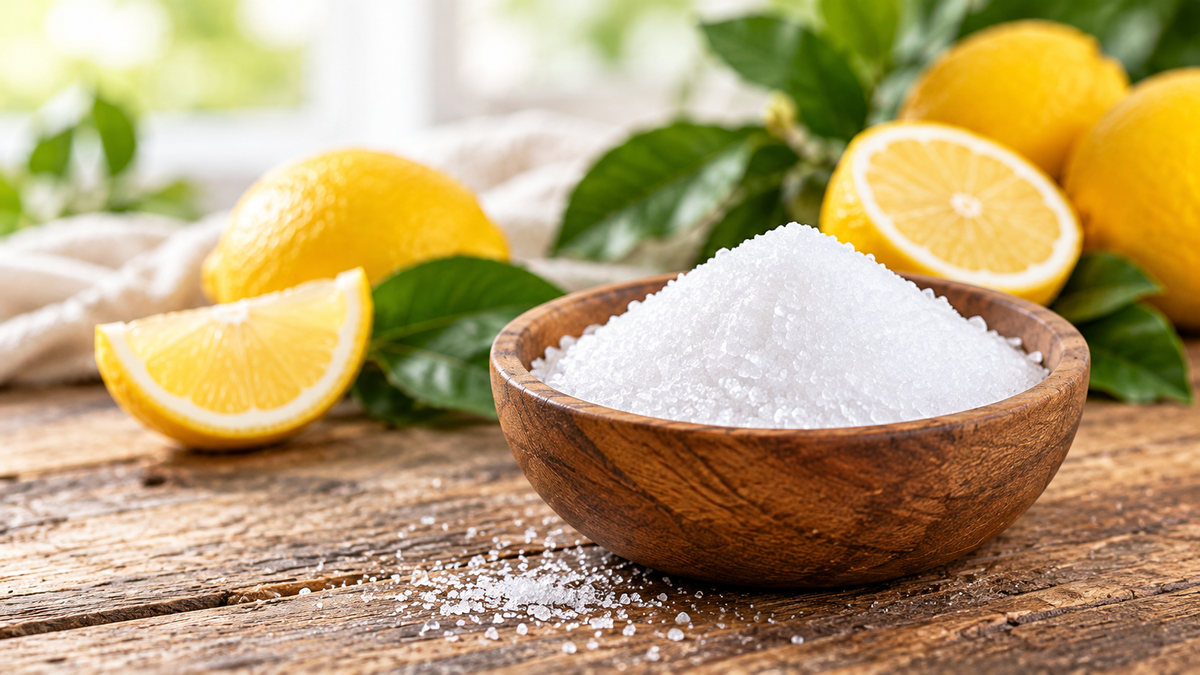
What is citric acid?
Citric acid is a naturally occurring organic acid found in citrus fruits such as lemons, limes and oranges. It gives these fruits much of their characteristic sharp, tart flavour. As an ingredient, it is sold as a white crystalline powder that dissolves readily in water.
Commercial citric acid is usually made by fermenting sugars, rather than extracting it from fruit. Food-grade citric acid is widely used in food and drink, winemaking and cordial making. On ingredients labels, it is also known as E330.
Where does citric acid come from?
Although it occurs naturally in citrus fruit, much of the citric acid sold today is made by fermentation. A microorganism called Aspergillus niger is grown on a sugar-containing medium. The citric acid produced is then separated, purified and crystallised into the powder used in food, drink and homebrewing.

Common uses for citric acid
This versatile ingredient has several useful applications in home food and drink making as well as cleaning.

Winemaking
Helps adjust acidity and balance flavour in suitable country and fruit wine recipes.

Cordials and drinks
Adds clean, sharp tartness that balances the sweetness of syrups and cordials.

Cleaning and descaling
Helps dissolve limescale on compatible kettles and equipment.

Food and preserves
Adjusts acidity in recipes that call for food-grade citric acid.

Homebrewing
May be used for acidity adjustments where a brewing recipe specifically calls for it.
Citric acid in winemaking
Acidity is essential to wine balance. A wine that lacks acidity can taste flat, while excessive acidity can make it unpleasantly sharp. Citric acid is sometimes used in country wines made from fruits, flowers and vegetables to create a fresher flavour.
For grape wines, tartaric acid is generally preferred. Some bacteria involved in malolactic fermentation can metabolise citric acid, so it is not the right choice for every wine.
There is no universal dose. Follow a reliable recipe and measure the existing acidity where practical. Make small, measured additions and reassess rather than adding citric acid by guesswork.

Citric acid for cordials and preserves
Citric acid is a familiar ingredient in homemade elderflower cordial and many fruit syrups. It adds a pleasantly tart note without introducing the full flavour of lemon juice, which can be useful when balancing a delicate floral or fruit recipe.
It can also be used in certain jams and preserves where a tested recipe calls for additional acidity. However, citric acid alone does not guarantee safe preservation. Use an appropriate recipe and follow its hygiene, bottling and storage instructions.
Elderflower cordial, fruit syrups and selected jams and chutneys that specifically call for citric acid.

Citric acid for cleaning and descaling
Citric acid reacts with mineral deposits such as limescale, making it useful for descaling suitable kettles, and some brewing equipment and fittings.
Always follow appliance or equipment manufacturer instructions, and rinse food-contact surfaces well after descaling. Avoid acid-sensitive materials including marble and limestone, and never mix citric acid with bleach or other cleaning chemicals.

Is citric acid safe?
Food-grade citric acid is commonly used as an acidity regulator in food and drinks and appears on UK ingredient labels as E330. The concentrated powder can irritate eyes or sensitive skin, so avoid inhaling dust and handle it with care.
Food-grade and cleaning-grade products are not necessarily interchangeable. Choose a product clearly marked for food use when preparing drinks or recipes.
Citric acid vs other winemaking acids
Citric, tartaric and malic acids contribute different characteristics to wines. They should not be treated as interchangeable without considering the recipe.
| Acid | Where it occurs | Common winemaking role |
|---|---|---|
| Citric | Citrus fruits | Bright tartness in some country and fruit wine recipes |
| Tartaric | Grapes | Usually preferred for acidity correction in grape wines |
| Malic | Apples and many other fruits | Firm, green-fruit sharpness; affected by malolactic fermentation |
Where a recipe specifies a prepared acid blend, follow that recipe rather than automatically substituting pure citric acid.
Where can you buy citric acid powder?
The Hop Shop in Plymouth stocks food-grade citric acid powder in two useful pack sizes. Our 100g citric acid powder is ideal for smaller batches and occasional recipes, while the 500g pack suits those who use it more regularly.
Frequently asked questions
Is citric acid the same as lemon juice?
No. Lemon juice contains citric acid, water and other flavour compounds. Citric acid powder provides acidity without the full flavour of fresh lemon juice.
Can I use citric acid in elderflower cordial?
Yes. Many elderflower cordial recipes include citric acid to add sharpness and balance sweetness. Follow a reliable recipe, including its safe preparation and storage guidance.
Can citric acid make homemade cordial shelf-stable?
No, not on its own. It adds acidity, but safe preservation depends on the whole recipe, processing method and storage conditions.
Can you use citric acid to make wine?
Some fruit, flower and country wine recipes call for it. For grape wines, tartaric acid is generally preferred. Use a reliable recipe and check the acidity before adjusting.
Is citric acid good for removing limescale?
It can help remove limescale from compatible appliances and brewing equipment. Check manufacturer guidance first and avoid acid-sensitive surfaces.
What is E330?
E330 is the food-additive number used for citric acid on UK ingredient labels.
Further reading: UK Government list of approved food additives and E numbers.


