
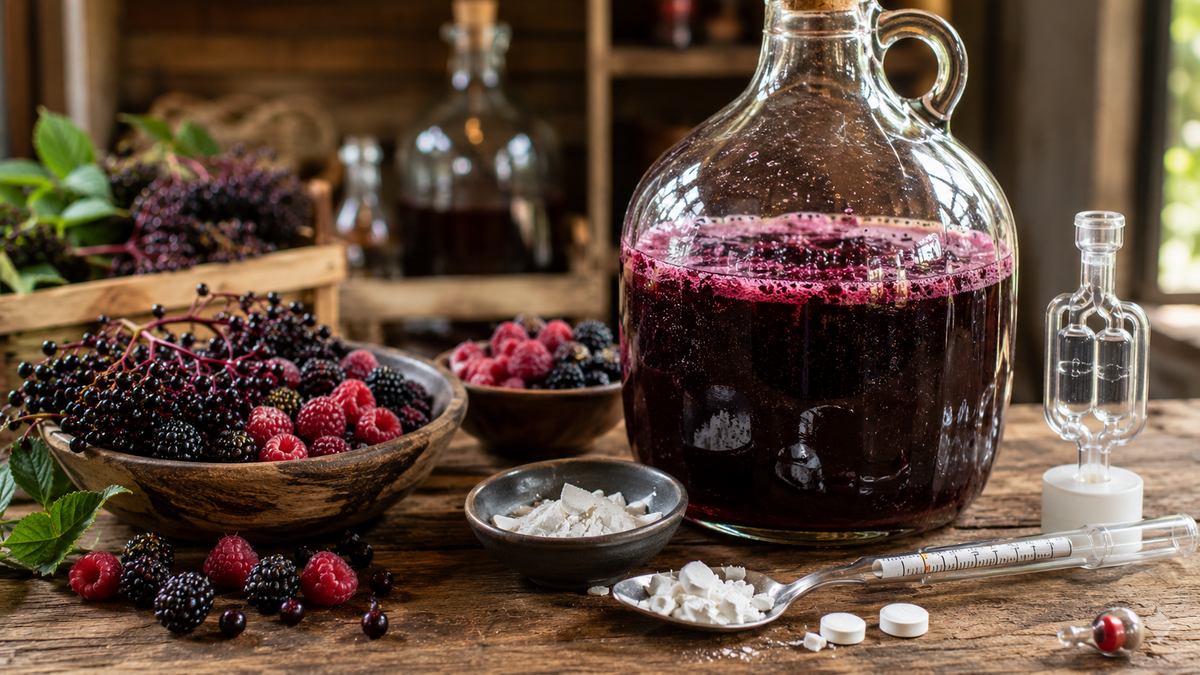
Campden tablets are one of the most useful—and most misunderstood—ingredients in home wine, cider, mead and beer making. Used correctly, they can help suppress unwanted microorganisms in fresh fruit, protect finished drinks from oxidation and remove chlorine or chloramine from brewing water.
What they cannot do is reliably stop an active fermentation or replace proper cleaning and sanitising. This guide explains what Campden tablets do, how much is typically used, when to add them and the mistakes to avoid.
Important: Campden tablet strength and manufacturer instructions can vary. The figures below are common homebrew guidelines for standard sodium metabisulphite tablets, including the products we sell. Always check the label and the recipe you are following.

What Are Campden Tablets?
Campden tablets are pre-measured tablets made from sodium metabisulphite or potassium metabisulphite. When dissolved, they release sulphur dioxide (SO₂), which is widely used in commercial and home winemaking.
Our current Young's Campden Tablets – 50 Pack and Campden Tablets – 100 Pack contain sodium metabisulphite.
The sulphur dioxide released can perform three main jobs:
- Suppress unwanted wild yeast and bacteria in fresh fruit juice or must.
- Help protect wine, cider and mead from oxidation and spoilage.
- Neutralise chlorine and chloramine in brewing water.
Campden tablets are not a substitute for a dedicated cleaner and no-rinse sanitiser. All fermenters, demijohns, airlocks, syphons, spoons and bottles still need to be cleaned and sanitised properly.
How Many Campden Tablets Should You Use?
The correct amount depends on the purpose, batch size, pH, tablet strength and any sulphite already present. Do not add tablets repeatedly by guesswork.
| Purpose | Common homebrew guideline | Timing and caution |
|---|---|---|
| Fresh fruit juice or must before fermentation | Approximately 1 tablet per 4.5–5 litres | Crush, dissolve and mix thoroughly. A wait of about 24 hours before pitching cultured yeast is commonly recommended. |
| Removing chlorine or chloramine from brewing water | Up to approximately 1 tablet per 75 litres | Only a small amount is required. Treat the water before adding brewing ingredients. |
| Protecting finished wine or cider | Follow the recipe or product instructions | The suitable dose depends on pH and previous sulphite additions. Do not automatically add a tablet at every racking. |
| Stabilising before back-sweetening | Campden alone is not sufficient | For a still drink, sulphite is commonly used with potassium sorbate after fermentation is fully complete. Follow both product instructions. |
To use a tablet, crush the required amount, dissolve it in a small quantity of clean water and stir it evenly through the full batch.
Using Campden Tablets Before Fermentation
Fresh apples, grapes, berries, flowers and other ingredients naturally carry wild yeast and bacteria. Some are harmless, but others can cause unpredictable fermentation, off-flavours or spoilage.
A common method for fresh-fruit wine, cider or mead is:
- Prepare the juice or must in a clean, sanitised fermenter.
- Crush the required Campden tablet quantity.
- Dissolve it and mix it thoroughly into the batch.
- Cover the vessel and wait for the period given by the recipe—commonly around 24 hours.
- Add the selected cultured yeast.
This suppresses rather than sterilises the natural microbial population, giving the chosen yeast a better opportunity to establish itself. Pitching cultured yeast immediately after sulphiting can delay or weaken fermentation.
Removing Chlorine and Chloramine From Brewing Water
Many UK water supplies contain chlorine or chloramine. They make drinking water safe, but can react during brewing and contribute medicinal, plastic-like chlorophenol flavours.
Campden treatment is quick and effective, but the amount needed is much lower than the usual fresh-must rate. One standard tablet is commonly sufficient for up to about 75 litres of brewing water. For a smaller batch, crush a tablet and use the appropriate fraction rather than adding a whole tablet unnecessarily.
This is the main reason many beer brewers keep Campden tablets on hand, even if they never make wine or cider.
Protecting Wine and Cider From Oxidation
After fermentation, oxygen exposure can dull fruit character, alter colour, shorten shelf life and create stale or sherry-like flavours. Sulphur dioxide provides antioxidant and antimicrobial protection, which can be useful during suitable transfers, ageing and preparation for bottling.
That does not mean one tablet should automatically be added every time wine is racked. The correct addition depends on the batch volume, pH, previous additions and how the drink will be stored. Minimise splashing and headspace first, then follow a reliable recipe or measured sulphite plan.
Campden Tablets and Back-Sweetening
Campden tablets do not reliably stop active fermentation. Adding them to a fermenting wine or cider should not be treated as an emergency stop button.
When a fully fermented still wine or cider is back-sweetened with fermentable sugar, sulphite is commonly used alongside potassium sorbate. Sulphite helps protect the drink, while sorbate inhibits surviving yeast from multiplying. Neither should be used as a shortcut before fermentation is genuinely complete.
For bottle-conditioned or naturally sparkling drinks, adding fermentable sweetener creates a different problem: the yeast needs to remain active for carbonation, so ordinary chemical stabilisation is unsuitable. Uncontrolled additional sugar can cause dangerous over-carbonation or exploding bottles. Use a proven carbonation and sweetening method for the style you are making.
Campden Tablets in Wine, Cider, Mead and Beer
Wine and country wine
Campden tablets are often used before fermenting fresh fruit and later for suitable oxidation protection. You may see them in recipes such as elderberry wine, blackberry wine, gooseberry wine and grape wine.
Cider
Fresh-pressed apple juice may be treated before cultured cider yeast is added. A completed still cider may also use sulphite as part of a suitable stabilisation plan, but Campden alone will not make a sweetened cider safe from renewed fermentation.
Mead
Campden tablets may be used for microbial and oxidation control, depending on the recipe. Honey must can ferment successfully without pre-treatment, so follow the method designed for your chosen mead.
Beer
Beer brewers mainly use Campden tablets to remove chlorine and chloramine from brewing liquor. They are not normally added to stop beer fermentation.
Common Campden Tablet Mistakes
Using more than the recommended amount
More sulphite does not automatically provide better protection. Excess can affect aroma and flavour and may interfere with fermentation.
Pitching yeast too soon
When treating fresh fruit must, allow the waiting time specified by the recipe before adding cultured yeast.
Trying to stop active fermentation
A typical Campden addition will not reliably stop a healthy active yeast population. Confirm fermentation is complete using stable hydrometer readings and use an appropriate method for the intended finished drink.
Assuming Campden is a sanitiser
Campden can suppress microorganisms in a liquid, but it does not replace proper cleaning and sanitising of brewing equipment.
Adding a tablet at every racking
Repeated additions can build up sulphite. Record what has been added and follow a recipe or measurement-based plan.
Safety and Storage
- Campden tablets contain sulphites.
- Follow the product label and do not exceed the recommended dose.
- Use in a well-ventilated area.
- Avoid breathing tablet dust or released fumes.
- Avoid contact with eyes and skin, and wash hands after use.
- Keep the pack dry, tightly closed and away from children.
- Anyone with a known sulphite sensitivity should take particular care.
Frequently Asked Questions
Can I make wine or cider without Campden tablets?
Yes. Many recipes and modern kits are designed to work without additional Campden tablets. They are useful where a recipe calls for microbial control, oxidation protection or water treatment, but they are not compulsory for every batch.
How long should I wait after adding Campden tablets?
When treating fresh fruit must before fermentation, around 24 hours is a common guideline before adding cultured yeast. Follow the specific recipe and product instructions.
Do Campden tablets kill yeast?
They can suppress sensitive wild microorganisms, but a normal addition does not reliably kill or stop an established active fermentation.
Do Campden tablets remove chloramine as well as chlorine?
Yes. This is why they are useful for brewing-water treatment where chloramine cannot simply be removed by leaving water uncovered.
Are Campden tablets the same as steriliser?
No. Clean and sanitise all equipment with suitable products. Campden tablets are used in the liquid for specific sulphite-related purposes.
Do Campden tablets expire?
They gradually lose effectiveness, especially if exposed to moisture or air. Store them tightly sealed and replace very old or poorly stored tablets.
Which Campden Tablets Should I Buy?
Choose the Young's Campden Tablets – 50 Pack for occasional batches or the better-value Campden Tablets – 100 Pack if you make wine, cider or mead regularly.
Both products use pre-measured sodium metabisulphite tablets. For larger-scale weighing, see our sodium metabisulphite powder.
Final Thoughts
Campden tablets are valuable when used for the right job: treating suitable fresh fruit must, protecting finished wine or cider and removing chlorine or chloramine from brewing water. The key is accurate dosing and timing.
They do not reliably stop active fermentation, they should not be added repeatedly without a plan, and they do not replace good sanitation. Used carefully, they can help produce cleaner, more stable homebrew without unnecessary sulphite additions.
Browse our 50-pack and 100-pack, or explore our wine-making supplies and cider-making equipment and supplies.